

How IVF Works Step by Step | Nahal Fertility Toronto
Wondering how IVF works step-by-step? Understanding the IVF process helps reduce stress and prepares you for what to expect along the way. At Nahal Fertility Clinic in Toronto, we walk every patient through a personalized IVF journey based on their specific fertility goals, age, and medical profile.
Whether you’re new to fertility treatment or transitioning from IUI, this guide outlines each phase of the IVF process, from consultation to embryo transfer and pregnancy testing.
What Is IVF?
In Vitro Fertilization (IVF) is an assisted reproductive technology (ART) used to help individuals and couples conceive. The process involves retrieving eggs, fertilizing them in a lab with sperm, and transferring a healthy embryo into the uterus.
IVF is often recommended for:
- Patients with blocked or damaged fallopian tubes
- Low ovarian reserve or age-related fertility decline
- Unexplained infertility
- Male-factor infertility
- Couples or individuals using donor eggs, sperm, or embryos
- Those requiring genetic testing to avoid passing on inherited conditions
Step 1: Initial Fertility Consultation
The first step in any IVF journey is a thorough fertility consultation. During this appointment, your doctor will:
- Review your medical and reproductive history
- Recommend fertility testing (bloodwork, ultrasounds, semen analysis)
- Discuss treatment options and tailor your IVF plan
If IVF is the right path, we’ll build your protocol and timeline right away.
Step 2: Ovarian Stimulation
You’ll begin hormone injections to stimulate your ovaries to produce multiple eggs instead of just one. This phase typically lasts 8–12 days and includes:
- Daily hormone injections at home
- Monitoring via bloodwork and ultrasound
- Adjustments to medication based on your response
The goal is to safely develop mature follicles that contain high-quality eggs.
Step 3: Trigger Shot and Egg Retrieval
Once your follicles reach ideal size, a final injection (trigger shot) is administered to mature the eggs for collection. Roughly 36 hours later, you’ll undergo:
- A minor, outpatient egg retrieval procedure
- Sedation for comfort
- Recovery within a few hours
Our embryology team then fertilizes the retrieved eggs using standard IVF or ICSI (Intracytoplasmic Sperm Injection), depending on your case.
Step 4: Embryo Development and PGT Testing (Optional)
Fertilized embryos are monitored in our state-of-the-art lab for 5–7 days until they reach the blastocyst stage. At this point, you may choose to undergo Preimplantation Genetic Testing (PGT-A or PGT-M) to:
- Screen for chromosomal abnormalities
- Avoid passing on single-gene disorders
- Select the healthiest embryo for transfer
Embryos can be transferred fresh or frozen depending on your plan and test results.
Step 5: Embryo Transfer
The embryo transfer is a quick and painless procedure where a selected embryo is placed into the uterus using ultrasound guidance.
- No anesthesia required
- Performed in our clinic
- You may resume light activity after the procedure
Depending on your case, you may transfer one embryo or more (though single embryo transfer is often recommended to reduce risks).
Step 6: Two-Week Wait and Pregnancy Testing
After the transfer, you’ll enter the “two-week wait” before your pregnancy test. This can be the most emotionally challenging part of IVF, so we offer full support during this time.
- Blood pregnancy test is done about 10–14 days after transfer
- If positive, early pregnancy ultrasounds will follow
- If negative, we’ll discuss next steps with care and sensitivity
Optional: Embryo Freezing and Future Transfers
Any additional healthy embryos can be frozen (cryopreserved) for future use. This offers:
- The ability to try again without repeating stimulation
- Family planning flexibility
- Lower costs for subsequent transfers
Our fertility preservation program ensures your embryos are securely stored and monitored.
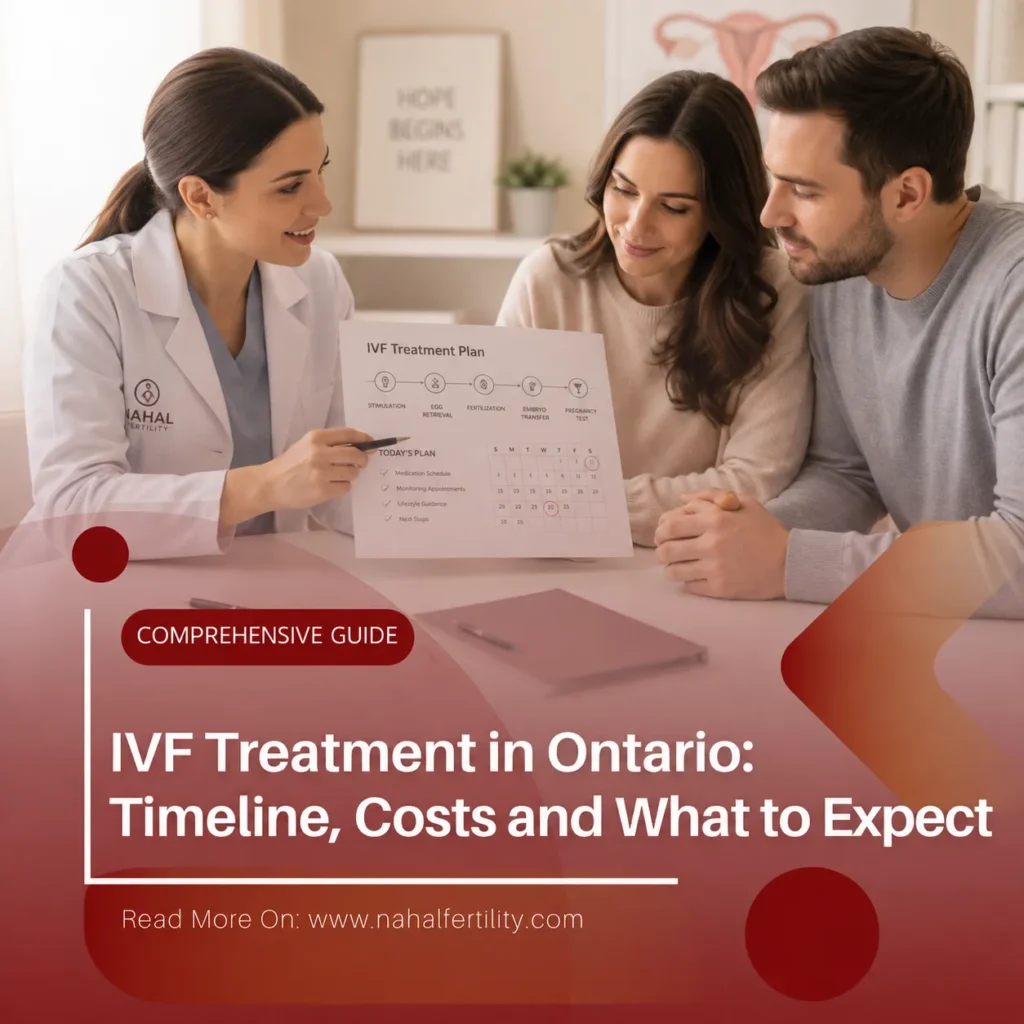
IVF Timeline Summary
| Phase | Duration | Key Activities |
| Consultation & Testing | 1–3 weeks | Diagnosis and treatment plan |
| Ovarian Stimulation | 8–12 days | Hormone injections and monitoring |
| Egg Retrieval | 1 day | Outpatient procedure |
| Fertilization & Embryo Culture | 3–6 days | Lab fertilization and growth |
| Embryo Transfer | 1 day | Painless in-clinic procedure |
| Pregnancy Test | ~2 weeks later | Blood test to confirm pregnancy |
How IVF Works, and How We Help
Now that you understand how IVF works step by step, you may feel more confident in your next decision. IVF can feel like a complex process, but with the right support and clinical team, it becomes a clear and guided journey.
At Nahal Fertility, our mission is to simplify the path to parenthood through expert care, empathy, and cutting-edge technology.
Schedule your IVF consultation and start your personalized fertility journey today.