Planning for a family doesn’t always happen on a predictable timeline. Whether you’re focusing on your career, continuing your education, waiting for the right time, or simply exploring your options, you may have wondered whether egg freezing can help you preserve your fertility for the future.
Egg freezing, also known as oocyte cryopreservation, is one option that allows women and people with ovaries to preserve unfertilized eggs for potential future use.
With advances in fertility treatments, egg freezing has become an increasingly discussed option for people who want more flexibility in their family-planning decisions.
But how does it actually work? When should you consider it? How much does it cost, and does insurance cover the procedure?
In this guide, we’ll walk you through the egg freezing process, what to expect at a fertility clinic, and some important things to consider before making a decision.
What Is Egg Freezing?
Egg freezing is a fertility preservation procedure in which mature eggs are collected from the ovaries and frozen for potential use in the future.
Unlike embryo freezing, the eggs are not fertilized with sperm before being stored. This means you can preserve your eggs without needing to make decisions about a sperm source at the time of freezing.
The eggs are preserved using a technique called vitrification, a rapid-freezing process that helps prevent damaging ice crystals from forming inside the cells.
When you’re ready to try for pregnancy, the eggs can be thawed, fertilized with sperm in a laboratory, and monitored as embryos develop. If suitable embryos develop, one may be transferred into the uterus as part of an IVF treatment cycle.
It’s important to understand that egg freezing preserves eggs, not a guaranteed future pregnancy. The chances of success depend on several factors, including your age when the eggs are frozen, the number of mature eggs stored, and their development after thawing and fertilization.
Why Do People Choose Egg Freezing?
There isn’t one reason why someone decides to pursue egg freezing. Everyone has different circumstances, priorities, and plans for the future.
1. Personal and Career Goals
Some people aren’t ready to start a family and would prefer to focus on their education, career, relationships, or other personal goals first. Egg freezing can provide an additional family-planning option to consider later.
2. Age-Related Fertility Changes
Egg quantity and quality naturally decline with age. Freezing eggs at a younger age may help preserve eggs that are more likely to have favourable reproductive potential compared with eggs collected later in life.
3. Medical Reasons
Certain medical conditions and treatments, including chemotherapy and some radiation treatments, can affect ovarian function and future fertility. In these situations, egg freezing may be considered as part of a fertility preservation plan before treatment begins.
4. Keeping Future Options Open
Some individuals simply aren’t sure when they will want children. Egg freezing offers the possibility of using eggs collected earlier in life if they decide to pursue pregnancy later.
There is no single reason or life stage that makes egg freezing the right choice. A fertility specialist can help you understand whether it makes sense for your individual circumstances.
What Is the Best Age for Egg Freezing?
Age is one of the most important factors to consider when discussing egg freezing. Women are born with a finite number of eggs, and both egg quantity and quality generally decline over time. This decline becomes more significant as age increases, particularly during the mid-to-late 30s. Freezing eggs at a younger age generally offers better reproductive potential because the eggs are younger at the time they are collected. However, there is no universal age that is right for everyone. Your ovarian reserve, medical history, reproductive goals, and personal circumstances should all be considered before deciding when to freeze your eggs.
Fertility assessments, including blood tests such as Anti-Müllerian Hormone (AMH) and an antral follicle count through ultrasound, can help your specialist estimate your ovarian reserve and discuss how you might respond to ovarian stimulation.
One important distinction: ovarian reserve testing can help estimate the potential number of eggs retrieved, but it cannot independently predict whether you will achieve a pregnancy naturally or guarantee the success of future treatment.
The earlier you explore your options, the more time you may have to make an informed decision.
How Does the Egg Freezing Process Work?
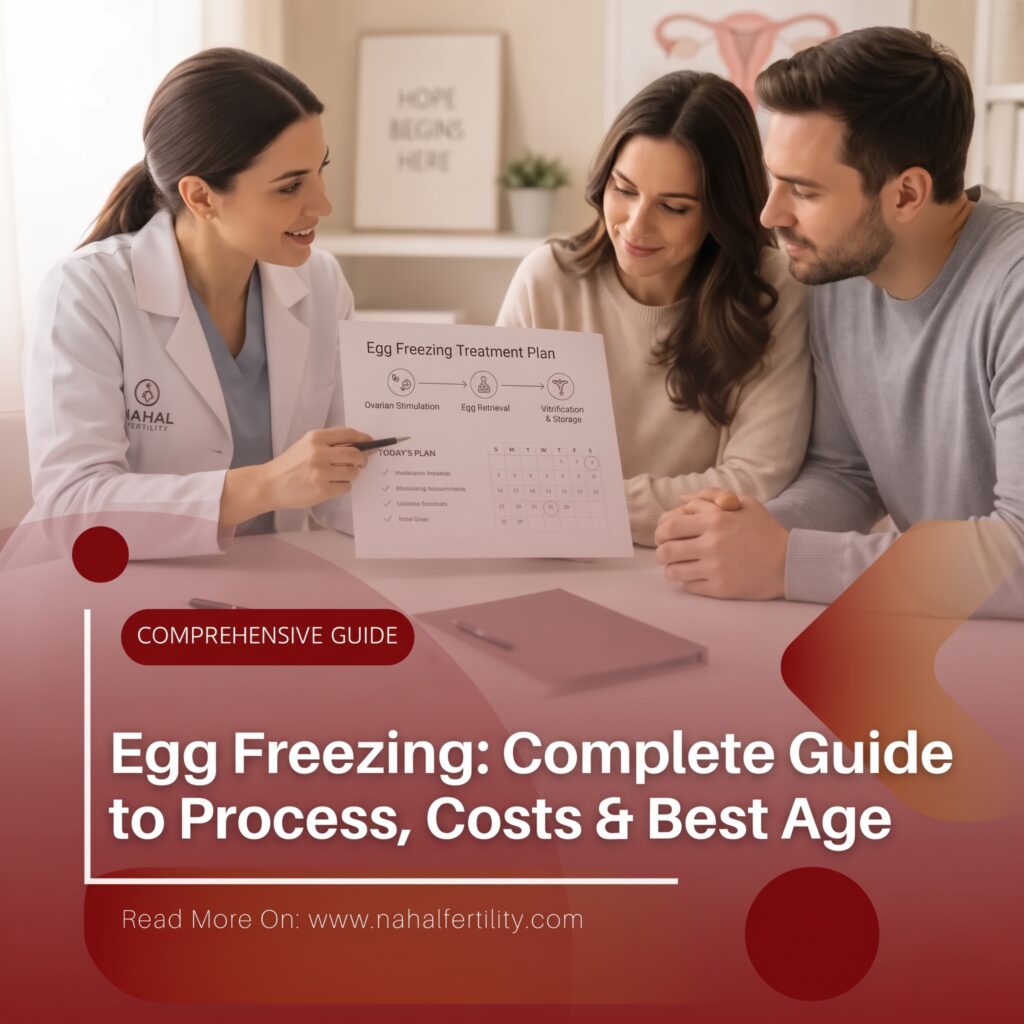
Understanding the treatment steps can make the egg freezing experience feel much more manageable. Although every treatment plan is personalized, the process generally involves the following stages.
Step 1: Initial Fertility Consultation
The first step is meeting with a fertility specialist to discuss your reproductive goals and medical history.
During this appointment, your specialist may review:
- Your menstrual and reproductive history.
- Your general health and medical background.
- Previous fertility treatments, if applicable.
- Your family-planning goals.
- Your ovarian reserve and recommended fertility tests.
Blood tests and an ultrasound may be recommended to assess your ovarian reserve and help determine an appropriate treatment plan.
Step 2: Ovarian Stimulation
During a natural menstrual cycle, several follicles may begin developing, but usually only one egg reaches maturity and is released during ovulation.
For egg freezing, fertility medications containing hormones are used to stimulate the ovaries to develop multiple follicles during one cycle.
This stage generally involves:
- Daily hormone injections, usually for approximately 8–12 days.
- Regular blood tests to monitor hormone levels.
- Ultrasounds to track follicle growth.
- Adjustments to medication when necessary.
The treatment response varies from person to person, so monitoring helps your fertility team determine the appropriate timing for egg retrieval.
Step 3: Trigger Injection and Egg Retrieval
Once the follicles have developed sufficiently, you will receive a final injection, commonly called the trigger shot, to help the eggs complete their final maturation.
Egg retrieval is generally scheduled approximately 34-36 hours after the trigger injection.
The procedure is performed using ultrasound guidance, with a fine needle used to collect eggs from the ovarian follicles. Sedation or anesthesia is generally provided for comfort.
Egg retrieval is usually a short outpatient procedure, and most patients return home the same day.
After retrieval, the embryology team examines the collected eggs to identify which ones are mature and suitable for freezing.
Step 4: Freezing and Storage
Mature eggs are frozen using vitrification, a rapid-freezing technique that helps protect them during the freezing process.
The eggs are then stored in specialized liquid-nitrogen storage systems at extremely low temperatures.
Your fertility clinic will explain its storage arrangements, applicable fees, consent requirements, and options for future use.
Not every egg collected during retrieval will necessarily be mature or suitable for freezing.
Step 5: Using Your Frozen Eggs in the Future
If you decide to use your frozen eggs later, they are carefully thawed and assessed by the embryology team.
The eggs that survive the thawing process are generally fertilized using Intracytoplasmic Sperm Injection (ICSI), in which an individual sperm is injected into an egg.
The resulting embryos are monitored in the laboratory as they develop. If an embryo is suitable for transfer, your fertility specialist can discuss the next steps toward an embryo transfer.
It is worth remembering that not every frozen egg will survive thawing, fertilize successfully, develop into an embryo, or result in a live birth.
How Much Does Egg Freezing Cost?
The cost of egg freezing is an important consideration for many individuals exploring fertility preservation.
The total cost can vary depending on the fertility clinic, medication requirements, treatment protocol, and storage arrangements.
When comparing treatment costs, it’s helpful to ask whether the quoted price includes:
- Initial consultation and fertility assessments.
- Ultrasounds and bloodwork during monitoring.
- Ovarian stimulation medications.
- Egg retrieval and sedation.
- Laboratory procedures and egg vitrification.
- Initial egg storage and annual storage fees.
- Future egg thawing, fertilization, and embryo transfer.
Some clinics provide package pricing, while others charge separately for medications, procedures, and storage.
For this reason, it’s a good idea to request a detailed cost breakdown before beginning treatment.
Does Insurance Cover Egg Freezing?
Insurance coverage for egg freezing depends on your individual insurance plan and the reason for treatment.
Some insurance plans may provide coverage for fertility preservation when it is medically necessary, such as before treatments that could affect fertility. However, elective egg freezing for personal reasons may not be included. In Ontario, you can also review provincial fertility funding guidelines through the Ontario Fertility Program to understand what is covered publicly versus privately.
Coverage can also differ for medications, egg retrieval, laboratory procedures, and ongoing storage fees.
Before starting treatment, contact your insurance provider and ask your fertility clinic for a detailed breakdown of potential expenses and any applicable coverage.
Is Egg Freezing Safe?
Egg freezing is an established fertility preservation technique, recognized as a standard clinical procedure by the American Society for Reproductive Medicine (ASRM), but like any medical procedure, it has potential risks and limitations.
Some possible risks include:
- Ovarian Hyperstimulation Syndrome (OHSS): In some patients, the ovaries may respond excessively to stimulation medications, resulting in abdominal discomfort, bloating, and, in more serious cases, fluid accumulation and other complications.
- Side Effects from Medication: Temporary symptoms such as headaches, breast tenderness, bloating, and mood changes may occur during ovarian stimulation.
- Egg Retrieval Complications: Although uncommon, egg retrieval may involve risks such as bleeding, infection, or injury to nearby structures.
- Ovarian Torsion: Enlarged ovaries can rarely twist, potentially affecting their blood supply.
Your fertility specialist will monitor your response throughout treatment and discuss ways to minimize potential risks.
It’s also important to remember that freezing eggs does not eliminate the risks associated with pregnancy at an older age. Your overall health and age when you eventually pursue pregnancy remain important considerations.
Does Egg Freezing Guarantee a Future Pregnancy?
No. Although egg freezing can provide an additional reproductive option, it cannot guarantee that you will have a baby in the future.
Several factors influence the likelihood of success, including:
- Your age when the eggs are frozen.
- The number of mature eggs successfully stored.
- How many eggs survive the thawing process.
- Fertilization rates and embryo development.
- Your health and reproductive circumstances when pursuing pregnancy.
Some individuals may need more than one egg freezing cycle to collect their desired number of mature eggs.
Others may never need to use their frozen eggs, while some may use them and still not achieve a pregnancy.
This is why fertility counselling and realistic expectations are important parts of the decision-making process.
Why Choose Nahal Fertility Clinic for Egg Freezing?
Choosing a fertility clinic is a personal decision, and having access to clear information and professional guidance can make a meaningful difference.
At Nahal Fertility Clinic, we understand that fertility preservation involves more than a medical procedure. It is also a personal decision that deserves time, attention, and compassionate support.
Our team provides personalized fertility care, helping patients understand their options, treatment plans, and the steps involved in egg freezing.
Whether you’re exploring social egg freezing or considering fertility preservation for medical reasons, we encourage you to ask questions and make decisions based on your individual needs.
Our clinic is located in Richmond Hill and welcomes individuals exploring fertility treatment options in the surrounding area.
Frequently Asked Questions About Egg Freezing
1. How long does the egg freezing process take?
The ovarian stimulation phase typically lasts around 8-12 days. Egg retrieval takes place approximately 34-36 hours after the trigger injection. The complete timeline, including initial consultation, testing, and preparation, varies from person to person.
2. How many eggs should I freeze?
There is no single recommended number that applies to everyone. Your age, ovarian reserve, and future family-building goals help determine how many mature eggs may be worth aiming for. Your specialist can discuss whether more than one cycle may be appropriate.
3. How long can frozen eggs be stored?
Eggs are stored in specialized liquid-nitrogen systems. The practical storage period and applicable legal, consent, and clinic requirements should be discussed with your fertility clinic.
4. Will freezing my eggs affect my ability to get pregnant naturally?
Egg retrieval collects eggs that would otherwise be lost during that menstrual cycle. Egg freezing itself does not stop you from trying to conceive naturally in the future. However, it does not prevent age-related fertility decline or guarantee future fertility.
5. Can I freeze my eggs if I am not married or do not have a partner?
Yes. Social egg freezing allows you to preserve unfertilized eggs without needing a partner or sperm source at the time of freezing. Future use can be discussed with your fertility specialist.
6. Is egg freezing the same as embryo freezing?
No. With egg freezing, mature eggs are collected and frozen without fertilization. With embryo freezing, eggs are first fertilized with sperm in a laboratory, and the resulting embryos are frozen for future use.
7. Do I need a doctor’s referral to explore egg freezing?
No referral is required to book a consultation at Nahal Fertility Clinic! You can contact our clinic directly to schedule an appointment and discuss your fertility goals and available treatment options. Our team is here to answer your questions and help you understand the next steps.
Take the First Step Towards Understanding Your Fertility Options
Deciding whether to freeze your eggs is a personal choice, and there is no need to rush into a decision.
Understanding your fertility, exploring available options, and speaking with a fertility specialist can help you make an informed choice that fits your life and future goals.
At Nahal Fertility Clinic, we’re here to help you understand your options and guide you through the process with personalized care and support.
Thinking about egg freezing?
Book a consultation with Nahal Fertility Clinic to learn more about your fertility preservation options and discuss a treatment plan tailored to your needs.
Medical Disclaimer: This article is intended for general educational purposes only and is not a substitute for professional medical advice, diagnosis, or treatment. Egg freezing outcomes vary between individuals, and no procedure can guarantee a future pregnancy. Consult a qualified fertility specialist to discuss your individual circumstances, treatment options, risks, and expected outcomes.